What We Carry
Private patterns: memory, protection, avoidance, identity and the familiar objects that say what people rarely explain.
Buy Chapter 01 →
About OBSERVE / The story behind the clothing
A glance held too long. A habit repeated. A feeling disguised as a joke. OBSERVE gives those ordinary moments a form people can wear.
How OBSERVE begins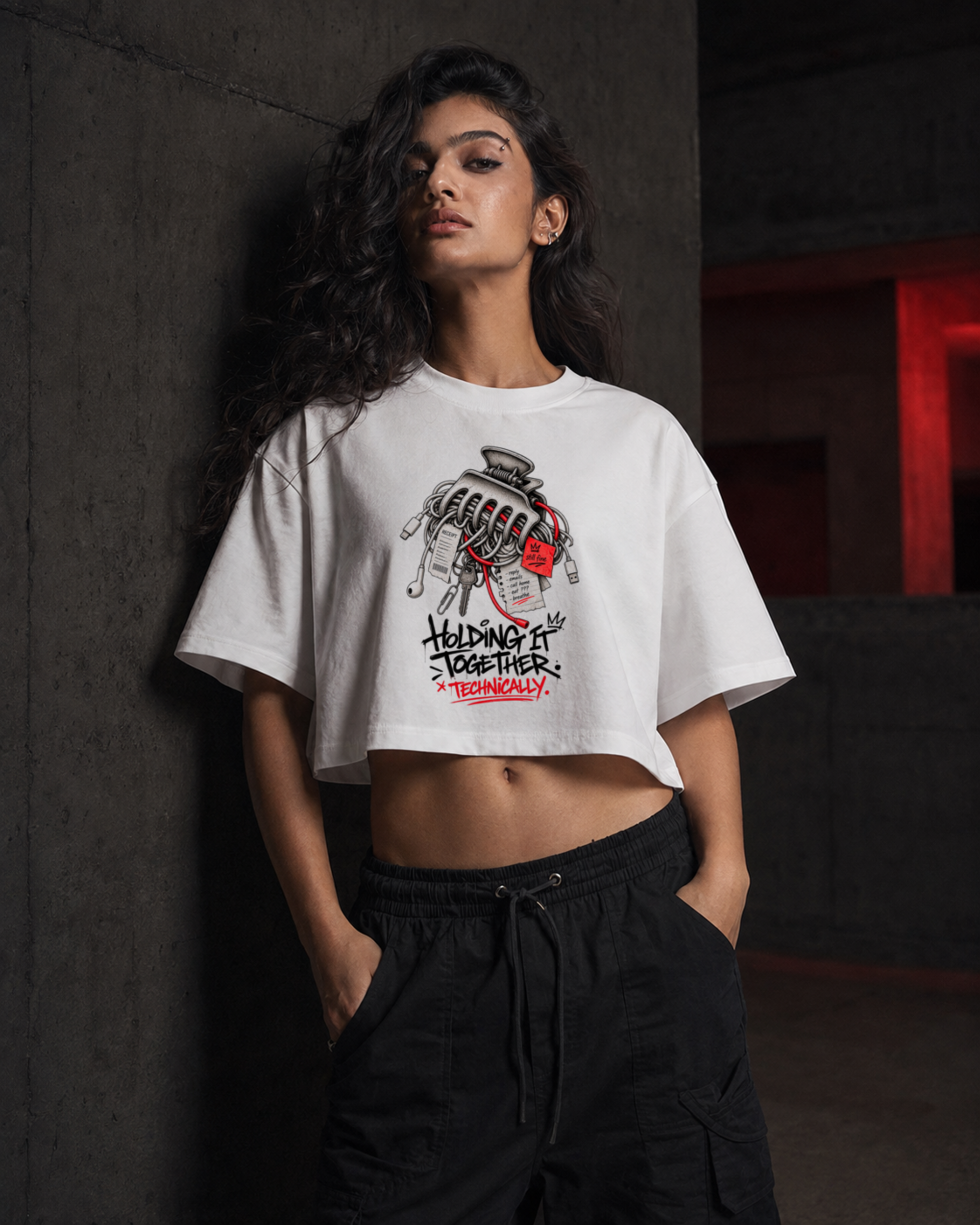
01 / The beginning
The most human stories rarely announce themselves. They hide inside ordinary behaviour.
OBSERVE began as a way to hold on to those moments: the joke used as armour, the boundary drawn too late, the object carrying a memory, the contradiction nobody says aloud.
We turn that recognition into artwork, then place the artwork on clothing so the story can move through the world without being explained first.
We built a way of looking.
The clothing came next.

02 / How a story becomes clothing
We begin with something specific enough to be true and familiar enough to belong to more than one person.
The observation is reduced to its sharpest tension. An object, character or gesture is chosen because it can carry that tension without explaining it away.
03 / The storytelling system
The first chapter looks within. The second looks at the space between people. The third asks what humans keep repeating together.
Private patterns: memory, protection, avoidance, identity and the familiar objects that say what people rarely explain.
Buy Chapter 01 →Access, boundaries, attention, absence and the distance that can exist while two people appear close.
The larger loops people enter together: knowing better, acting otherwise and returning to the same line.
04 / The design philosophy
Every OBSERVE design should reward a second look. These are the four things that make the language recognisable.
A cat, glowstick, eye or tangled wire gives the thought an immediate physical form.
The object carries two truths at once: protection after damage, usefulness after breaking, functioning without being fine.
Red identifies the pressure point—the break, warning, wound or detail where the second meaning enters.
The artwork works from a distance. Recognition arrives later, when the wearer or viewer finds themselves inside it.
05 / Start with what stayed